Blog Image 2

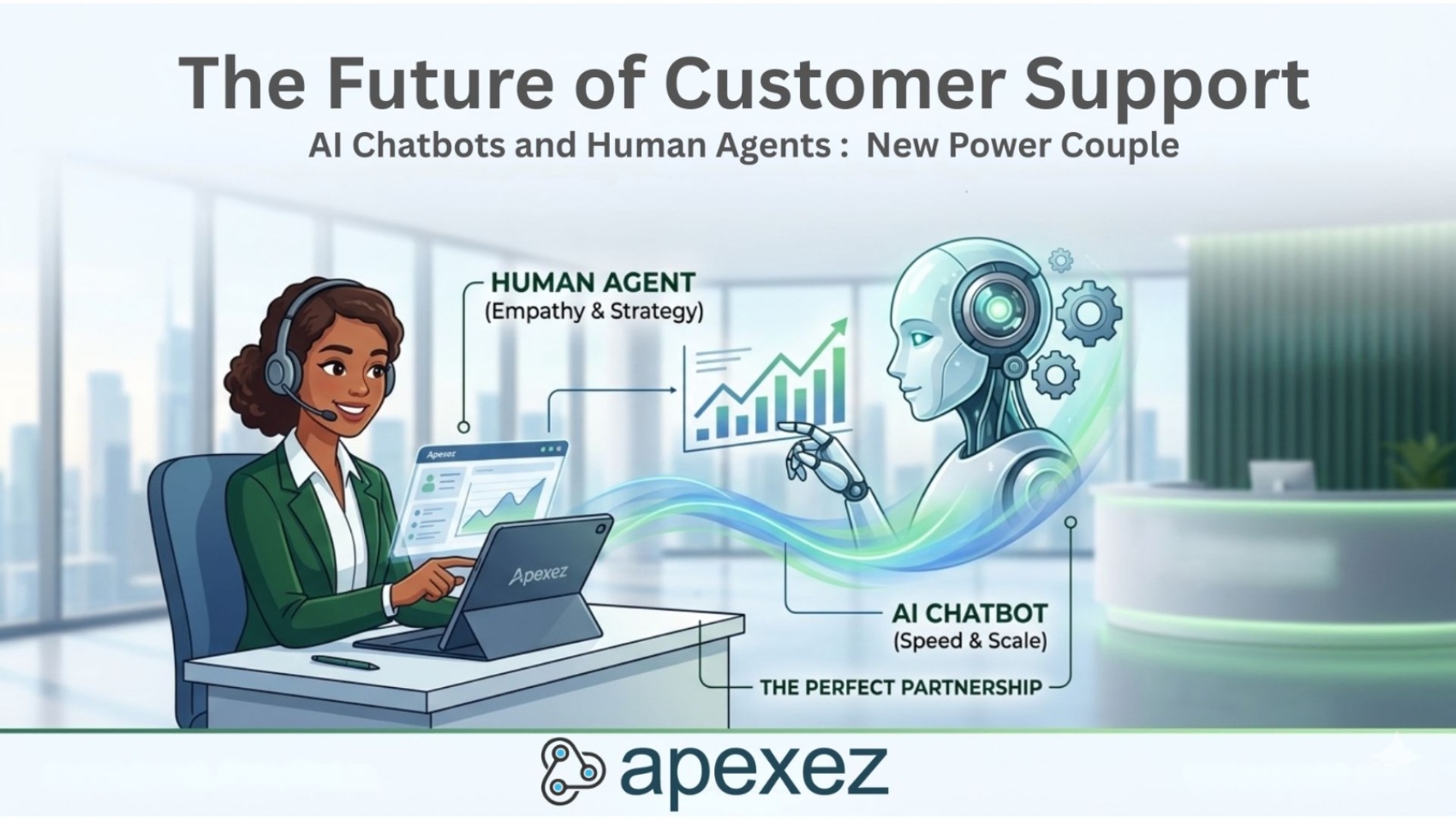
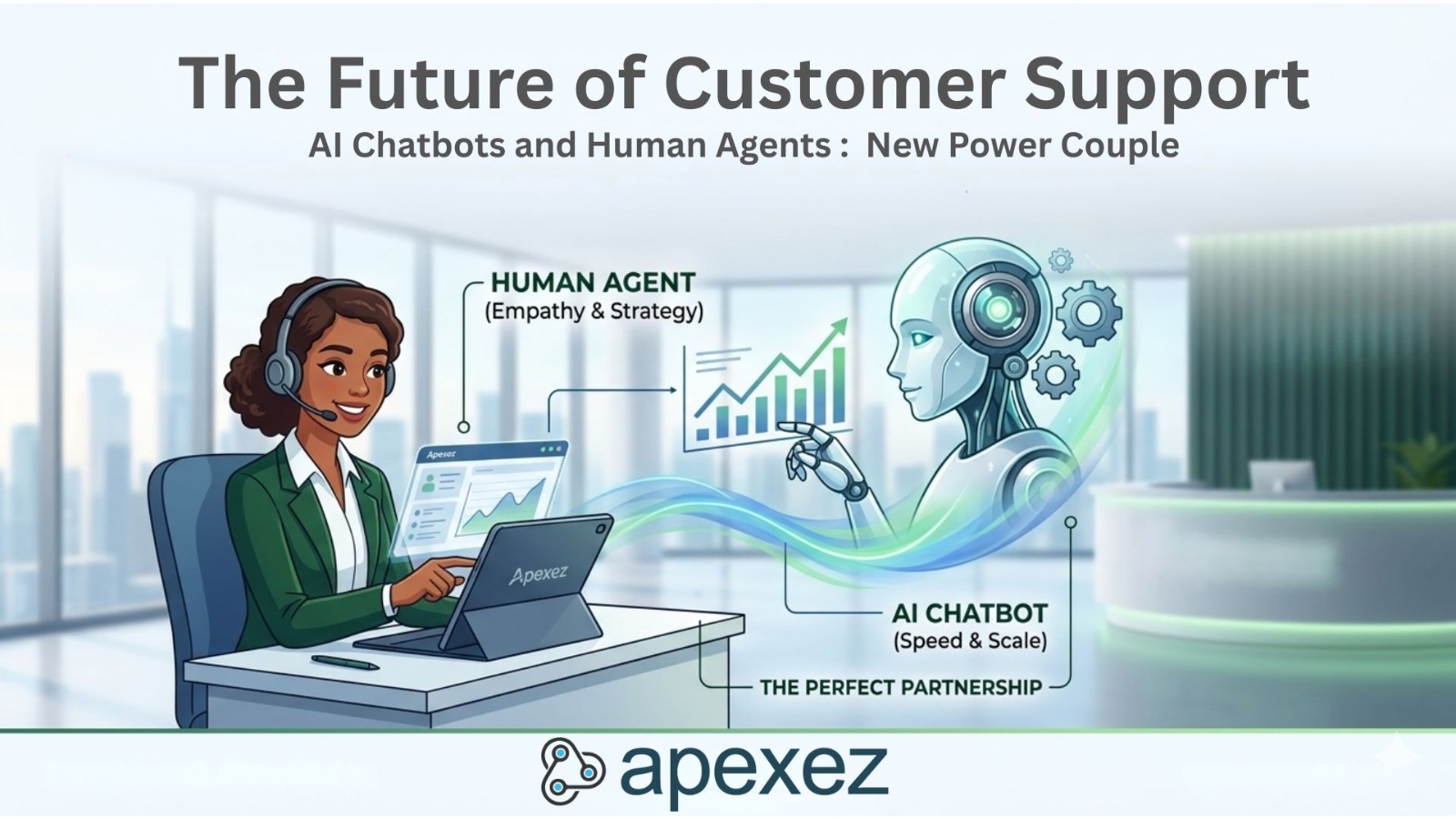
The Future of Customer Support: Why AI Chatbots and Human Agents are the New Power Couple

The Future of Customer Support: Why AI Chatbots and Human Agents are the New Power Couple

In the fast-paced digital landscape of 2026, the phrase “please hold” has become the ultimate business deal-breaker. Today’s customers don’t just want answers; they want them now, and they want them to be accurate. This shift has ignited a massive debate: Should businesses go all-in on AI chatbots, or is the human touch still irreplaceable?

The truth isn’t found in choosing one over the other. The future of elite customer support lies in a strategic partnership where technology handles the volume and humans handle the heart.

The Evolution of Customer Support

We’ve come a long way from the days of massive call centres and “9-to-5 only” support hours. Support evolved from physical mail to landlines, then to email, and eventually to live chat. However, even live chat had a flaw: it required a human on the other end at all times.

Enter the Intelligent Virtual Agent. Unlike the clunky, script-based bots of the past, today’s AI-powered assistants understand context, tone, and intent, marking the biggest leap in service history.

AI Chatbots vs. Human Agents: A Comparison

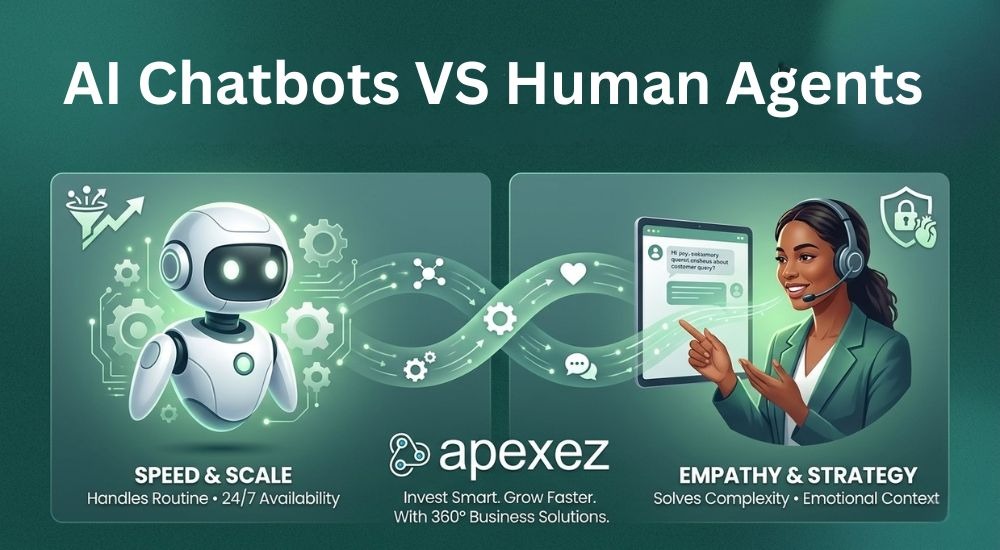
To understand how to “Invest Smart,” we have to look at the unique strengths of both players:

Feature

AI Chatbots

Human Agents

Availability

24/7/365 without breaks.

Subject to shifts and fatigue.

Response Time

Instant (millisecond range).

Minutes to hours depending on queue.

Scalability

Can handle 10,000+ chats at once.

Limited to 2–3 chats simultaneously.

Complexity

Best for FAQs and routine tasks.

Essential for empathy and “gray area” logic.

The Benefits of AI-Powered Support

Implementing an AI chatbot for business isn’t just a tech upgrade; it’s a financial strategy.

  • Cost Efficiency: Automating routine queries (like tracking an order or resetting a password) reduces the need for a massive support team.
  • Zero Wait Times: Instant engagement keeps customers from bouncing to a competitor’s site.
  • Data-Driven Insights: AI tracks every interaction, telling you exactly what your customers are struggling with in real-time.
AI Chatbots for Customer Support

Industries Already Leading the Charge

From real estate to retail, virtual agents for companies are becoming the standard:

  • E-commerce: Handling returns and product recommendations.
  • Real Estate: Qualifying leads and booking property viewings instantly.
  • Healthcare: Managing appointment scheduling and basic symptom checks.

How Apexez Builds Your Intelligent Virtual Agent

At Apexez, we don’t believe in “one-size-fits-all” bots. We build automated customer service systems that are deeply integrated into your specific business DNA.

As your 360° digital growth partner, we focus on:

  1. Natural Language Processing (NLP): Ensuring your bot sounds like a professional member of your team, not a robot.
  2. Seamless Handoffs: If a situation gets complex, our AI smartly transitions the conversation to a human agent with a full transcript of the chat.
  3. Continuous Learning: Our agents get smarter with every conversation, constantly refining their accuracy to help you Grow Faster.

Stop Juggling. Start Growing. The question isn’t whether you need AI, but how fast you can implement it to stay ahead of the curve.
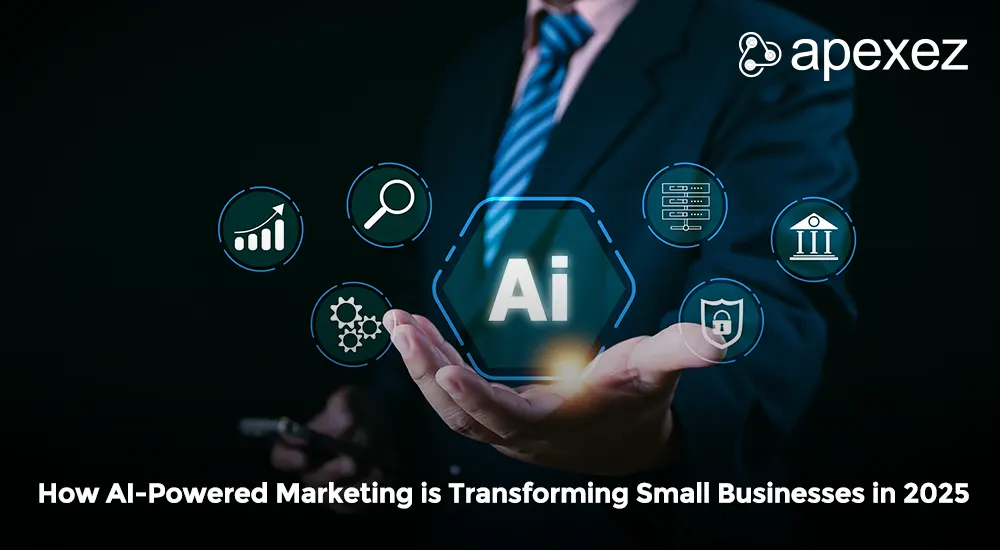
AI-powered marketing

How AI-Powered Marketing is Transforming Small Businesses in 2025

AI-powered marketing

How AI-Powered Marketing is Transforming Small Businesses in 2025

By the year 2025, there is a very competitive digital environment where the old marketing techniques are no longer effective in small businesses. Customers have demands to receive an immediate feedback, an individual experience, and a smooth service. That is where AI-driven marketing comes of changing how companies communicate, nurture and convert leads. Firms such as Apexez allow small businesses to use automation, intelligent analytics, and thoughtful, outreach to convert clicks into customers, which was previously the preserve of large companies. This in-depth book examines how AI is changing marketing and small businesses, what tools are making them successful and what steps need to be taken today to put it into practice.

  1. Why AI Matters for Small Businesses in 2025

1.1 Faster Decision-Making and Smarter Growth

Small business has to make rapid decisions so as to keep up with the competition. AI delivers immediate clues on customer behaviours, advertising, and emerging trends in the market. Businesses no longer wait to make educated guesses in which campaigns to use to facilitate the growth process.

1.2 Improved Efficiency and Reduced Costs

AI now supports repetitive marketing tasks, (such as lead scoring, automated follow-ups, and audience segmentation) so that business owners and small teams can concentrate on sales and strategy.

  • Automated workflows deprive them of hours per week
  • Predictive lead scoring makes sure energy is utilized on the promising prospects.
  • Dynamic content building makes the involvement of other large marketing units reduce.

2. AI Tools That Turn Clicks into Clients

The scope of AI-powered marketing entails entire sales funnel, which ranges between attracting attention, converting, and retaining customers. These are the best tools:

2.1 Smart Chatbots & Virtual Assistants

AI-powered marketing

Instant response to the frequently asked questions

Send the data of visitors to be used in future campaigns. In case of a small business, more leads, quicker engagement with customers and increased customer satisfaction is the result of it without the need to hire more employees.

For small businesses, this means more leads, faster engagement, and higher customer satisfaction without hiring additional staff.

2.2 Predictive Lead Scoring & Segmentation

The customer behaviour patterns, the visits to the site by the customers and the interactions with them in the past are used in the analysis to help AI to forecast what leads would most likely convert.

Benefits include:

  • Sorting high-value prospects
  • Segmenting leads based on intent
  • Eliminate wasted time on low-quality leads

This ensures sales teams focus where it matters most, increasing conversion rates.

2.3 Generative Content & Personalized Campaigns

The tools that are driven by AI can now be used to provide personalized email, social media and landing-page content that is based on user actions. Customized campaigns will translate into:

  • Increased open rates and click through rates
  • Bigger involvement with social sites
  • Professional brand presence which is maintained on a regular basis.

Even the small enterprises could appear and act as large branded companies without staffing up hefty creative departments.

2.4 Predictive & Sentiment Analytics

AI is not only useful in content creation but it also examines the emotions and reactions of the audiences. Sentiment analysis assists companies:

  • At detecting early signs of dissatisfaction
  • Adapt provides real-time offers or messaging
  • Maximise on great impacting campaigns

The approach opens up opportunities to improve over time and to yield better ROI on the marketing activities that would be orchestrated.

3. AI Marketing Across the Customer Journey

AI enhances every stage of the marketing funnel:

Funnel Stage

AI’s Role

Business Impact

Awareness

Personalized ads & social targeting

Lower ad spend, higher relevance

Interest

AI chatbots & dynamic email nurturing

Stronger engagement, faster responses

Decision

Predictive offers & real-time recommendations

Smarter pricing, better conversion rates

Retention

Loyalty campaigns, sentiment & churn analysis

Higher customer lifetime value


4. Real-World Benefits for Small Businesses

Small and medium business: AI marketing brings tangible performance gains:

More Conversions: A quicker lead response and personalization mean more sales.

Low Medium of Marketing: Automation enables automation of tedious functionalities.

Improved Customer Insights: AI analytics recognize trends to make smarter strategy.

Saving on time: Company owners will be able to concentrate on growth rather than micromanagement.

Think of AI in a local boutique store: It uses a website chatbot that welcomes all visitors, responds to size and stock questions and collects emails. AI email campaigns automatically remind the customers who have not gone through with the purchase. The use of predictive analytics contributes to determining which items have to be stocked in advance so that the demand increases before they are purchased.

The result? Greater sales and repeat customers as well as less operational stress.

5. Common Myths About AI in Marketing

Despite its benefits, AI adoption still faces hesitation. Here are the top misconceptions:

Myth 1: AI Will Replace Human Creativity

AI is not a substitute, but an instrument. It will deal with the data and routine jobs, whereas human beings will concentrate on strategy, narrative and empathy.

Myth 2: AI is Only for Big Businesses

Such AI tools as chatbots, automated CRMs, and social schedules are affordable to small businesses now.

Myth 3: AI is Too Complicated

Software, such as Apexez, has the added advantage of AI features in an easy to use dashboard meaning that regular users can enjoy the technology.

6. How Apexez Empowers Small Businesses

Apexez is a full suite of digital growth where IT, AI, and marketing automation are combined to make businesses grow quicker. Apexez gives you:

AI-Powered CRM to track leads and customers

Chatbots & Automation for 24/7 engagement

Website & E-commerce Development optimized for conversions

Marketing Automation for social media, emails, and ad campaigns

As a local start up or a large business, Apexez enables you to convert each click, into a paying customer.

7. Your AI Marketing Adoption Roadmap

  1. Find the Marketing Bottlenecks – Find out where leads are leaking.
  2. If You Are a Newbie, Start Small, a single item such as chatbots or AI email automation.
  3. Track Results- Track how engaging, converting, and time-blown.
  4. Grow Steadily -Introduce predictive analytics and content automation.
  5. Optimize throughout the flow-let data be your next step.

Following these steps ensures smooth integration and maximum ROI.


Conclusion:

Types of marketing that use AI are not a thing of tomorrow anymore; they are a viable way that would help a small business grow in the year 2025. With collisions of speed, personalization, and automation, the AI will assist the companies:

Generate more leads

Market to the prospects well

Make the click counts to loyal customers

 In the case of small businesses, collaborating with Apexez is equivalent to working smart, not hard or succeeding on a competitive digital economy.

AI in Marketing

How AI is Revolutionizing the Marketing Landscape

AI in Marketing

How AI is Revolutionizing the Marketing Landscape

The marketing landscape is on the cusp of a profound transformation driven by the rapid advancements in artificial intelligence (AI). These new AI marketing tools are poised to revolutionize how companies approach their strategies, structure their organizations, and ultimately reach their target markets.

However, amidst this exciting wave of innovation, identity verification will emerge as a critical factor in ensuring AI’s ethical and effective use in marketing.

AI marketing: A new era of possibilities

AI marketing tools are no longer a futuristic concept but a tangible reality. They offer unprecedented capabilities, from hyper-personalized customer experiences to data-driven campaign optimization. Let’s delve into how these tools are reshaping the marketing landscape:

  1. Hyper-personalization: AI algorithms can analyze vast amounts of customer data to deliver tailored messages and product recommendations in real time. Imagine websites dynamically adapting content and offers based on each visitor’s individual preferences and past behavior. This level of personalization can significantly enhance customer engagement and drive conversions.
  2. Predictive analytics: AI can predict customer behavior with increasing accuracy, enabling marketers to anticipate needs and proactively offer solutions. This can lead to improved customer satisfaction and retention rates.
  3. Campaign optimization: AI-powered tools can analyze campaign performance data in real time, allowing marketers to make data-driven adjustments on the fly. This can significantly improve the effectiveness of marketing campaigns and reduce wasted ad spend.
  4. Content creation: AI is increasingly being used to generate marketing content, including ad copy, social media posts, images and even product descriptions. While this can streamline content production, it raises important questions about authenticity and the need for human oversight.
AI-driven personalization

Organizational impact and go-to-market strategies

The rise of AI marketing will inevitably impact the structure and operation of marketing organizations:

  1. New skill sets: Marketing teams will need to acquire new skills in data analysis, AI tool utilization, and ethical AI implementation. This may necessitate upskilling or hiring new talent.
  2. Data-driven culture: Companies will need to foster a data-driven culture within their marketing departments. This involves embracing data-driven decision-making and investing in data infrastructure.
  3. Collaboration: Marketing teams will need to collaborate closely with data science and IT teams to maximize the benefits of AI marketing tools.

As for go-to-market strategies, companies will need to adapt to the evolving landscape:

  1. Omnichannel marketing: AI can help create seamless, personalized experiences across multiple channels, from email to social media to in-app messaging.
  2. Customer journey mapping: AI can help map the customer journey more effectively, identifying pain points and opportunities for optimization.
  3. Transparency and trust: As AI becomes more prevalent in marketing, companies will need to be transparent about their use of AI and ensure customer trust.
Future of marketing

The critical role of identity verification

Technology Advancement

Identity verification will play a crucial role in ensuring AI’s ethical and effective use in marketing. Here’s why:

  1. Data accuracy: AI relies heavily on data. Accurate identity verification ensures that the data fed into AI algorithms is reliable, preventing biased or discriminatory outcomes.
  2. Regulatory compliance: Many regions have strict data protection, age verification, and privacy regulations. AI ensures that marketing practices adhere to data protection regulations, such as GDPR or CCPA, by accurately verifying identities and managing consent. This reduces the risk of legal penalties and enhances consumer trust.
  3. Preventing fraud: Inaccurate or fraudulent data can lead to misdirected marketing efforts, wasted resources, and even reputational damage. Identity verification helps mitigate these risks.
  4. Building trust: Customers are more likely to trust brands that prioritize their privacy and security. Robust identity verification practices can strengthen this trust.

The road ahead

Revolution Change in AI

The future of marketing is undoubtedly AI-powered. Embracing AI marketing tools can unlock new levels of personalization, efficiency, and effectiveness. However, companies must prioritize identity verification to ensure the ethical and responsible use of these powerful technologies.

As AI continues to evolve, the marketing landscape will undoubtedly undergo further transformations. Companies that adapt to these changes and harness the power of AI will be well-positioned to thrive in the years ahead.

2

The Role of AI in Modern IT Services | AI-Driven Solutions

The Role of AI in Modern IT Services | AI-Driven Solutions

The exponential growth of technology in the 21st century has led to the creation of Artificial Intelligence, a tool that is set to impact every aspect of businesses and facilities. The transformative effect of AI is particularly evident. The application of AI in IT services is revolutionizing how businesses operate, providing numerous benefits, including task automation, enhanced security measures, predictive analytics, and improved customer experiences.

Automation of IT Operations

AI tools have the capability to potentially automate various IT operation in order to make them more officiant and less time-consuming. Repetitive tasks can be automated such as system maintenance, data backup, and software updates, thus freeing IT staff to focus and work on more complex and strategic projects that cannot be executed without human intervention. Businesses can streamline workflows and improve productivity through the automation of IT operations via AI.

Improved Security Measures

AI is playing a decisive role in bolstering IT security, particularly in the face of growing cybersecurity threats. AI has the potential to detect possible threats, provide real-time alerts, and even predict future attacks. Additionally, AI can automate patch management and security updates, which in turn reduces the chances of human errors leading to vulnerability.

Predictive Analytics

Another important role of AI in the IT industry is predictive analysis, whereby AI system analyse vast amounts of data to predict trends, behaviours, and probable outcomes. AI-driven predictive analytics can be of good use for IT service providers as it can be use to predict system issues, network failures, or cyber-attacks before they materialize, thus allowing for a more proactive problem-solving attitude.

Improved Customer Experiences

The application of AI in IT services has also led to improved customer experiences. AI-powered chatbots and virtual assistants can provide instant, personalized responses to customer queries, increasing satisfaction levels. Moreover, AI can analyse customer behaviour to offer more customized services, thus enhancing the customer journey

Service Portfolios

In terms of service portfolios, there will likely be a shift towards optimizing the value gained from both new and established solutions by efficiently utilizing AI tools, applications and services for specific purposes. Service providers may place more emphasis on building reusable intellectual property (IP) assets, including knowledge bases, solutions customized for particular needs and frameworks aimed at enhancing performance.

Predictions For The Future Of IT Service Industry Transformation

The IT industry is expected to undergo a significant transformation. Starting with a period of disruption in 2024, the industry is expected to see a major reallocation in 2025, where Global 2000 (G2000) organizations will allocate over 40% of core IT spending towards AI initiatives. However, despite these substantial investments, large enterprises still may struggle to fully leverage their AI capabilities due to inadequate emphasis on employee skill training.

Many large corporations will emerge as key players in the IT service market, driven by their investments in innovative technologies and AI-driven services. This evolution may position these firms at the forefront of the industry, significantly altering the competitive landscape and setting new standards for technological integration and customer service excellence.

The role of AI in modern IT services cannot be overstated. By automating routine IT tasks, enhancing security measures, providing predictive analytics, and improving customer experiences, AI is reshaping the landscape of IT services. It’s clear that AI, while not replacing human input, is an essential tool in advancing IT services and enhancing business operations in today’s digital age. For instance, in the real estate sector, AI tools can streamline property management and improve client interactions, demonstrating its versatility across industries. To learn more about how technology is transforming real estate, visit https://estatex.com/